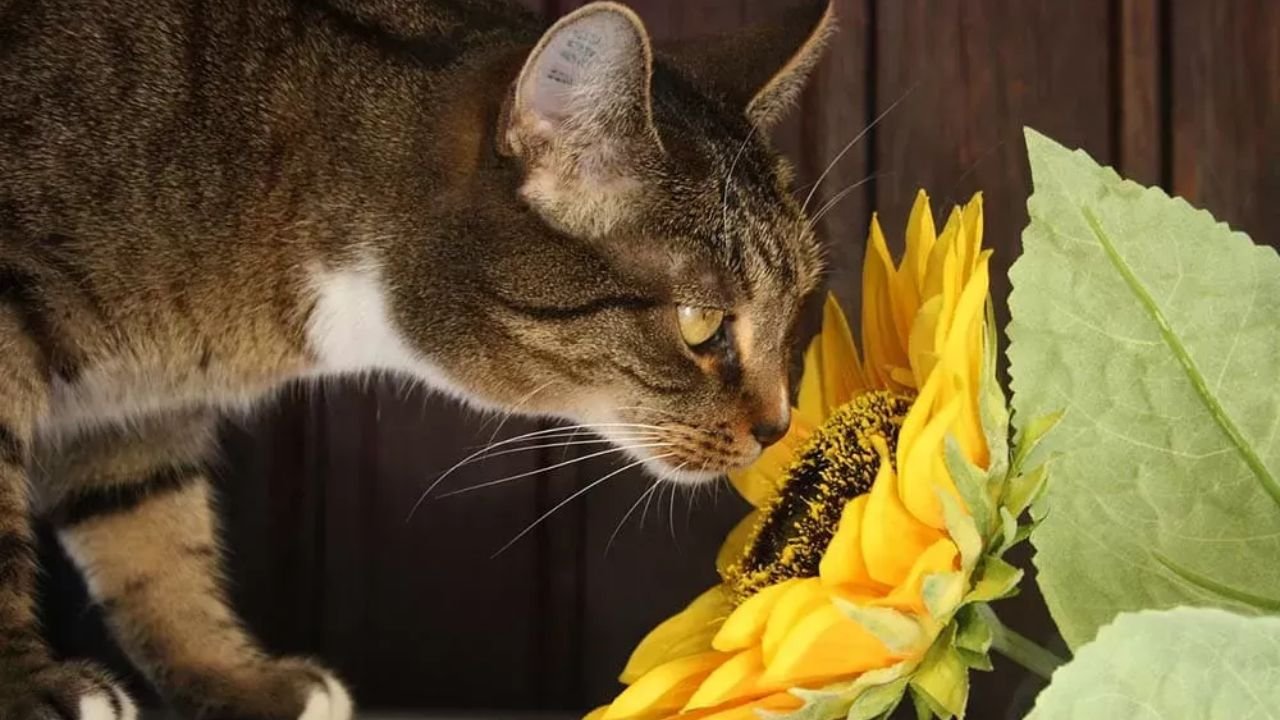
A cat can turn almost anything into a toy. One minute it is chasing a feather, and the next minute it is sniffing a flower vase sitting quietly on a table. This fascination tends to cause panic to the owners of pets, more particularly when fresh flowers are introduced into the house. Sunflowers can be seen everywhere: in gardens, bouquets, and home decorations, because they look bright and are easy to take care of, which makes them a unique flower among all the ones that are commonly shown in gardens. However, there are still so many pet owners who come and pose such an easy question: Are sunflowers toxic to cats?
It is not surprising to be concerned. Quite a number of the common flowers may lead to the cat developing severe health complications, and some may be life-threatening with a mere exposure. Due to this, responsible pet owners would seek explicit responses prior to introducing any plant to their home. The positive response is that in most cases, sunflowers are considered to be less harmful flowers to cat-owning households. Nevertheless, it is not without details that one should get to know about safety, since it is not only about whether a plant is poisonous or not.
This article explores everything cat owners need to know, including how cats react to sunflowers, whether sunflower seeds and sunflower oil are safe, what flowers are toxic to cats, and how to create a pet-friendly indoor environment without giving up beautiful flowers.
About Sunflower: Understanding This Popular Garden Flower
The Sunflowers are some of the most famous flowering plants on the earth. They can be easily recognized due to their large yellow petals and dark centers and since they are able to track the sunlight as they grow, they have been a source of fascination to gardeners over the ages.
Sunflower was originally planted in North America and has had various applications since ancient times. They have been utilized by people as food, cooking oil, medicines, and as decorations. They are considered to be one of the most extensively cultivated ornamental flowers today as they are good-looking, simple to handle, and adaptable to various climatic conditions.
Sunflowers are popular among most of the homeowners due to their ability to add color to the backyards and indoors as well. Consequently, pet owners tend to come across them on a regular basis and automatically start researching whether such flowers pose any danger to their cats.
Quick Overview of Sunflowers
| Feature | Details |
| Scientific Name | Helianthus annuus |
| Plant Type | Flowering Annual Plant |
| Native Region | North America |
| Common Uses | Decoration, Seeds, Oil Production |
| Pet Toxicity Status | Non-Toxic |
| Indoor Friendly | Yes |
| Outdoor Friendly | Yes |
Their popularity is constantly increasing as they have both aesthetic appeal and functionality. Luckily, their safety profile results in them being a much better choice than most other flowering plants that are available in the stores.
Are Sunflowers Toxic to Cats? What Veterinarians Want Owners to Know
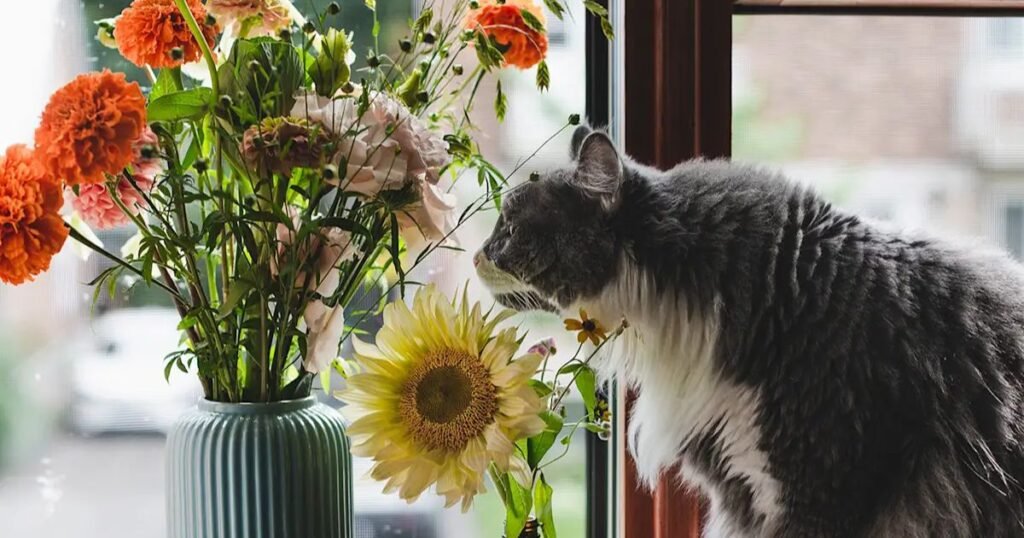
The answer is no. Sunflowers are said to be non-toxic to cats. They are non-toxic and their petals, stems, leaves and pollen are free of the harmful toxins present in some toxic plants. In an incident where a curious cat bites a small part of a sunflower, it is highly improbable that it will be poisoned.
It does not imply that a cat must make a snack off a sunflower. The digestive system of cats is configured for animal protein. The plant material is not of great value to them in terms of nutritional value and overconsumption may cause mild digestive problems.
One of the most common cases that veterinarians are exposed to is cats with short-term stomach upsets after chewing plants. The response is normally due to the digestive system failing to cope with high quantities of vegetation, but not due to the existence of toxins within the plant.
What Might Happen If a Cat Eats Sunflowers?
Most cats will show no symptoms at all. Some cats, however, can experience minor digestive discomfort.
Possible reactions include:
- Mild vomiting
- Temporary diarrhea
- Slight nausea
- Reduced appetite for a short period
- Minor stomach irritation
Without treatment, such symptoms are likely to recover in a short time. Nevertheless, in case of harsh symptoms or continuity, the safest choice will be to speak to a veterinarian.
Why do Veterinarians Consider Sunflowers a Lower-Risk Flower?
Veterinary professionals generally classify sunflowers as a low-risk ornamental plant amongst cats as they do not possess the poisonous compounds as with highly toxic flowers like lilies or oleander. Although other digestive disturbances may arise in case of high doses, in most cases extreme poisoning is not closely linked with exposure to sunflower.
Sunflowers and Cats: Why These Flowers Usually Cause Few Problems
Cats investigate their surroundings differently from humans. They rely heavily on smell, texture, and taste when exploring unfamiliar objects. Flowers are a commonly attractive thing due to the fact that they are moving, smelling good or bad, and offer something new to explore. Speaking about sunflowers and cats, it is better to comprehend the reasons why cats chew on plants at all. Most owners think that the behavior is an indication of hunger, which is hardly ever true.
Why do cats chew plants?
A cat may chew flowers because:
| Common Reason | Explanation |
| Curiosity | Exploring a new object |
| Boredom | Seeking stimulation |
| Texture | Enjoying the feel of leaves |
| Scent Attraction | Investigating unfamiliar smells |
| Natural Behavior | Normal exploratory activity |
This behavior is also more common amongst indoor cats since they are not exposed to many environmental challenges compared to outdoor cats. A practical illustration is that of a young indoor cat who finds a bunch of sunflowers that have been placed close to the window. The cat can sniff the flowers, beat at the petals and ultimately chew a leaf just because it is intrigued by the object. The interaction does not have severe consequences in most cases of sunflowers.
Are Sunflowers Cat Safe for Indoor and Outdoor Environments?
The other enquiry that most of the owners pose is whether sunflowers are cat-safe in their day-to-day lives. The response is true to a large extent. Sunflowers are said to be one of the superior flowers that are suited to homes with pets. They are not associated with the hard toxins that are present in perilous vegetation and they do not usually cause severe responses when they are accidentally exposed to.
But safety still lies in the manner in which the flowers are exhibited and taken care of. Even a securely placed stable device has few risks compared to a bouquet kept in reach of an active cat.
Practical Ways to Keep Sunflowers Around Cats
A few simple habits can help keep both flowers and pets safe.
- Place arrangements on stable surfaces.
- Remove fallen petals regularly.
- Replace wilted flowers promptly.
- Avoid mixed bouquets containing unknown flowers.
- Supervise cats that frequently chew plants.
These measures minimize the possibility of digestive complications, and, nevertheless, provide people with an opportunity to have fresh flowers in the house.
Do Sunflowers Offer Any Real Benefits for Cats?
Sunflowers are regarded by people as synonymous with beauty but the plant does not lack practical value. Farmers commercially plant sunflower seeds and oil, and gardeners plant sunflowers to attract pollinators. The seeds contain high fat, protein, vitamins and minerals. In cooking, cosmetics and skincare, sunflower oil is utilized. This adaptation assists in understanding why the sunflowers are considered to be one of the most widely grown flowering crops throughout the globe.
In the case of cats, it is a different story nutritionally. Most of the dietary needs of cats are met by animal-based foods. Although sunflower products are not necessarily harmful, they are indeed not supposed to substitute a balanced feline diet. This distinction will allow owners to make more effective choices regarding the inclusion of plant-based products in the environment of cats and which ones are purely aesthetic in nature.
How About Sunflower Seeds? Are They Safe for Cats to Eat?
Sunflower seeds are misleading, as individuals usually relate them directly to the sunflower plant. In general terms, the flower is quite safe, though sunflower seeds are another matter. The manner of preparation of the seeds is usually a significant factor in defining their suitability for cats.
Ordinary sunflowers do not have the harmful toxins in most harmful plants. Nonetheless, the majority of sunflower seeds that are marketed in stores are those that are consumed by humans. To enhance taste, manufacturers often add salt, spices, flavorings and preservatives. The use of those ingredients might not present any issues to people, but may lead to a digestive problem in cats.
The minimal content of regular, plain, unsalted sunflower seeds will not hurt. Nevertheless, Sunflower seeds do not have to be included in the normal diet of cats. They have vast differences in their nutritional needs compared to humans and commercially available cat foods already have the nutrients they need.
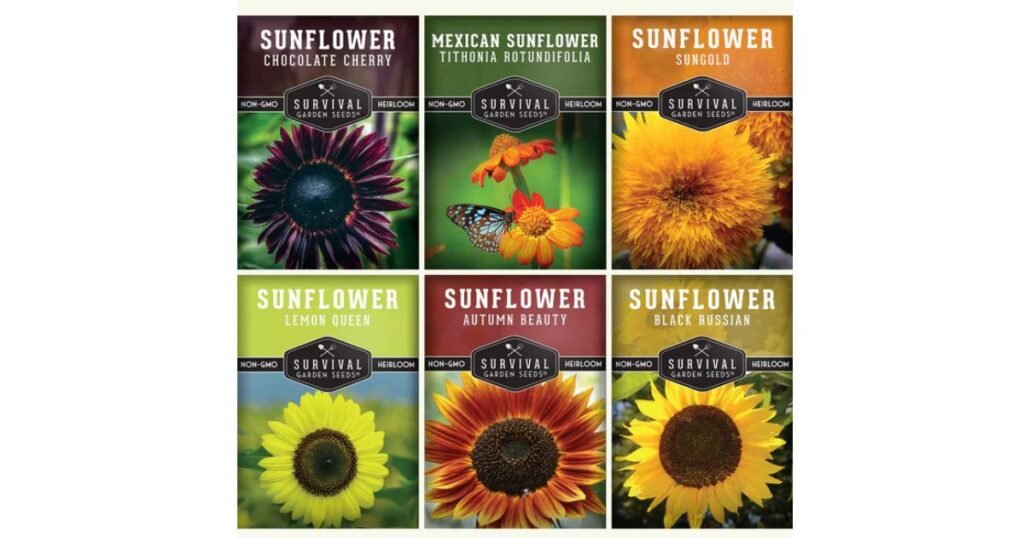
Comparing Different Types of Sunflower Seeds
| Type of Sunflower Seed | Safe for Cats | Reason |
| Raw and Unsalted | Generally Safe | No harmful additives |
| Salted Seeds | Not Recommended | Excess sodium can cause problems |
| Flavored Seeds | Avoid | Seasonings may irritate digestion |
| Seeds With Shells | Avoid | Shells may become choking hazards |
| Roasted and Seasoned | Avoid | Added ingredients increase risk |
Why Salted Seeds Can Create Problems
The cats have minimal requirements when it comes to sodium in the diet. Excessive salt could strain their system unnecessarily and might result in symptoms that cannot be disregarded by the owners. By feeding the cat sunflower seeds that contain a great deal of salt, the cat can get stomach-related issues, become thirsty, emit vomit or open the bowels. Under more severe circumstances, too much sodium consumption might have an impact on coordination and general health. Luckily, a majority of cats are not interested in sunflower seeds. However, it is still of a good idea to store the flavoured or salted seeds away.
A Practical Example
“Suppose a family is watching TV and eating salted sunflower seeds, a few of them fall on the floor and the household cat really wants to open them and eat them. Prone selections of one or two seeds will not make an emergency but continuous access to salted foods may eventually lead to digestive complications.”
Can Cats Consume Sunflower Oil Safely?
In millions of kitchens around the world, sunflower oil is found. It is mainly used in cooking, baking and preparation of food due to its non-assertive taste and variety. A common question that cat owners ask is, Does accidental exposure cause any harm? Since they might already have sunflower oil at home, they may be curious whether it poses any threat. The good news is that cats are not affected by sunflower oil per se. In case the cat licks a small portion of a spoon, plate or even a counter, severe complications cannot be experienced. The greater issue is one of quantity, but not toxicity.
Sunflower oil has a high level of fat as other oils. Small quantities may not pose any problem, but higher quantities may disrupt the digestive system of a cat and lead to unnecessary calorific intake.
How Sunflower Oil May Affect Cats
| Amount Consumed | Possible Outcome |
| Tiny Accidental Lick | Usually No Symptoms |
| Small Quantity | Mild Digestive Upset |
| Moderate Quantity | Soft Stool or Diarrhea |
| Frequent Consumption | Weight Gain Risk |
| Excessive Intake | Digestive Distress |
Majority of cat that is healthy can recuperate swiftly once a kind of small dose of sunflow oil is ingested. Discomforts tend to develop when oil is a dietary component as opposed to an occasional mishap.
Should Cat Owners Add Sunflower Oil to Food?
Other pet owners also test oils since they feel that they can enhance the quality of coats or skin. Although some fats in our diet may maintain healthy skin, properly balanced commercial cat food already has well-balanced nutrients. Self-prescription of adding sunflower oil could potentially only add more calorie intake, but would not provide significant amounts of benefits. At that, most veterinarians suggest adhering to full-fledged and balanced feeding rather than the regular use of oils.
Pet-Friendly Flowers That Are Safe for Cats
Fresh flowers may make a room more hospitable, but pet owners are always afraid to bring them to their apartments. Cats are endangered by numerous plants, which searches for safer variants a priority. Luckily, a few others, which have a similar safety profile to sunflowers, exist. These alternatives enable the homeowners to have beautiful floral decorations without always fearing unintended poisoning.
These flowers can be thought of as non-toxic, but their owners must never forget that excessive intake of the plant can cause mild digestive upset. Safety does not necessarily imply that a flower is to be in the cat bowl.
Popular Flowers Considered Safer for Cats
| Flower | Safety Status |
| Sunflowers | Safe |
| Roses | Safe |
| Orchids | Safe |
| Snapdragons | Safe |
| Freesia | Safe |
| Gerbera Daisies | Safe |
| Asters | Safe |
| Madagascar Jasmine | Safe |
These flowers are commonly used in decorations by many florists. However, it is always advisable to look at the contents of the bouquets as sometimes, mixed arrangements contain both safe plants and unsafe plants.
Choosing Pet-Friendly Floral Arrangements
Cat owners tend to concentrate on the primary flower and ignore other garden with support plants. Leaves and filler plants may also pose a more serious threat than the flowers. The process of choosing flowers does not only focus on the centerpiece, but should look into the whole arrangement. This is a basic routine that can help keep cats out of the way of poisonous plants and help eliminate stress in their owners.
Why Pet-Friendly Flowers Remain the Better Choice
The home must be comfortable for individuals as well as pets. By using safer flowers, owners are free to choose which ones they use in decorations without fear of cats leaping on a table or windowsill each time. This is one of the reasons as to why pet safe flowers are recommended by many veterinarians where possible. The lower number of risks found in the environment, the easier it is to live every day to everybody in the household.
What Flowers Are Toxic to Cats? The Plants Every Owner Should Recognize
Even though it is true that sunflowers are usually the center of attention due to their popularity, there are numerous incidents where flowers are utilized as entire branches of emergencies. Learning the flowers that cats can be poisoned with will not only answer the serious health problems, but also save the life of a pet in several situations. Many flowers that are commonly available possess compounds that have an influence on the kidneys, heart, nervous system, or digestive system. This is dependent on the species of the plants and the quantity of consumption. Other flowers are not very toxic to the stomach. The reactions are life-threatening and can be caused by other individuals when a remarkably low exposure is received.
Flowers Commonly Associated With Cat Poisoning
| Flower | Toxicity Level |
| Lilies | Extremely Dangerous |
| Oleander | Highly Toxic |
| Azalea | Highly Toxic |
| Autumn Crocus | Highly Toxic |
| Cyclamen | Toxic |
| Daffodil | Toxic |
| Hyacinth | Toxic |
| Tulip | Toxic |
| Lily of the Valley | Highly Toxic |
| Sago Palm | Extremely Dangerous |
Among all toxic flowers, lilies deserve special attention because they rank among the most dangerous plants for cats.
Why Lilies Cause So Much Concern
Even tiny amounts of lily material can create severe health complications. A cat does not need to eat an entire flower to become ill.
Exposure can occur through:
- Chewing a leaf
- Eating a petal
- Drinking vase water
- Licking pollen from fur
- Contact with fallen plant material
Veterinary professionals often treat lily exposure as an emergency because kidney damage can develop rapidly. Learning that flowers are toxic to cats helps owners make informed decisions when buying flowers, arranging bouquets, or planning gardens.
Common Flowers You Should Keep Away From Cats at All Costs
Many flower varieties sold in garden centers and supermarkets look harmless. Their appearance often gives no indication of the risks they pose. Unfortunately, some of the most attractive flowers also rank among the most dangerous for feline companions. A responsible approach involves identifying potentially harmful flowers before they enter the home. Prevention remains far easier than dealing with an emergency veterinary visit later.
Warning Signs of Plant Poisoning
Cats react differently depending on the flower involved. Still, several symptoms appear frequently when toxic plants are consumed.
Watch for:
- Vomiting
- Diarrhea
- Excessive drooling
- Loss of appetite
- Weakness
- Tremors
- Unusual behavior
- Difficulty walking
- Breathing problems
These symptoms do not automatically indicate poisoning, but they warrant attention if a cat recently interacted with an unfamiliar plant.
Creating a Safer Environment
Flower safety begins with awareness. Take time to identify every plant entering your home, especially those included in mixed bouquets. If you are uncertain about a flower’s safety, keeping it away from pets until you verify its identity remains the safest choice. Small preventive steps often make the biggest difference. Choosing safer flowers, monitoring curious pets, and removing dangerous plants can significantly reduce the risk of accidental poisoning.
Are Sunflowers Cat Safe? Benefits and Precautions for Cat Owners
Many pet owners search for the phrase Are sunflowers toxic to cats because they want a simple answer before bringing these flowers into their homes. While the flowers themselves are generally considered non-toxic, practical safety involves more than toxicity alone.
A flower may not contain harmful chemicals, yet it can still create minor issues if a cat chews large amounts of it. Fortunately, sunflowers fall into the category of plants that are usually well tolerated by cats. Most cats simply sniff them, investigate them for a few minutes, and move on.
The real concern often comes from what surrounds the flower rather than the flower itself. Mixed bouquets sometimes contain toxic plants, chemical sprays may remain on petals, and decorative additives can occasionally cause irritation. Therefore, checking the entire arrangement makes far more sense than focusing on a single flower.
What Makes Sunflowers a Better Choice Than Many Flowers?
Several characteristics make sunflowers attractive for cat owners.
| Feature | Why It Helps |
| Non-Toxic Plant Material | Reduces poisoning risk |
| Low Risk Pollen | Less concern than many flowering plants |
| Easy Identification | Owners can recognize them quickly |
| Common Availability | Easy to purchase safely |
| Durable Structure | Less likely to shed heavily indoors |
This does not mean cats should regularly eat sunflower petals or leaves. Instead, it means accidental contact is unlikely to create the serious emergencies associated with toxic plants.
How to Stop Cats From Chewing Houseplants and Flowers
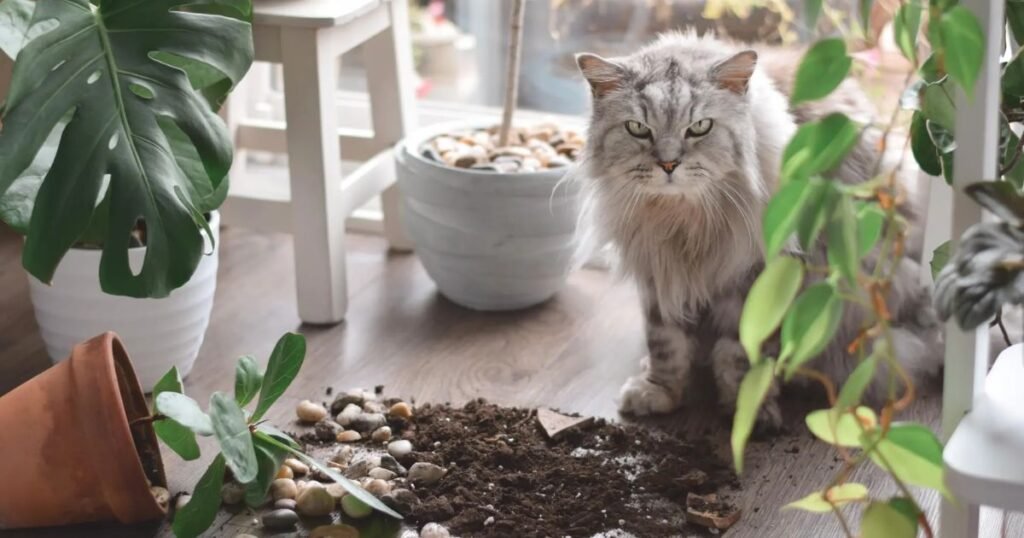
Indoor cats face a different environment than outdoor cats. Since they spend most of their time inside, they often seek entertainment from objects that humans barely notice. Houseplants, flowers, and bouquets naturally attract their attention. A bored cat may chew leaves, bat at petals, or climb onto shelves simply because it enjoys exploring. This behavior does not necessarily indicate a nutritional deficiency. More often, it reflects curiosity and a desire for stimulation.
Why Indoor Cats Explore Plants
Several factors encourage plant-chewing behavior.
- Curiosity about new objects
- Attraction to movement and texture
- Boredom and lack of stimulation
- Interest in unfamiliar scents
- Natural hunting and exploration instincts
Providing enrichment can reduce unwanted plant interactions. Interactive toys, climbing structures, scratching posts, and puzzle feeders often redirect attention away from flowers and plants.
Creating a Cat-Friendly Home Without Sacrificing Décor
Many people assume they must choose between beautiful flowers and pet safety. Fortunately, that is rarely true. A combination of safer flower choices, thoughtful placement, and regular supervision allows most households to enjoy decorative plants without creating unnecessary risks. The goal is not to eliminate every flower but to make informed decisions about which plants belong in your home.
What To Do Immediately If Your Cat Eats a Flower
Even careful owners occasionally discover their cat chewing a plant. The first step is staying calm. Panic often makes situations harder to manage. Begin by identifying the flower involved. If the flower is known to be safe, monitoring your cat may be all that is necessary. If the flower is unknown or potentially toxic, contact a veterinarian immediately.
Steps to Take Immediately
| Action | Why It Matters |
| Identify the Plant | Helps determine toxicity |
| Remove Remaining Plant Material | Prevents further ingestion |
| Observe Symptoms | Allows early intervention |
| Contact a Veterinarian | Provides professional guidance |
| Bring a Plant Sample | Assists with identification |
Quick action becomes especially important when dealing with potentially toxic flowers such as lilies, oleander, or azaleas.
Symptoms That Need Immediate Attention
Some symptoms deserve prompt veterinary care.
These include:
- Repeated vomiting
- Difficulty breathing
- Severe lethargy
- Seizures
- Loss of coordination
- Excessive drooling
- Collapse
While sunflowers rarely cause these symptoms, other flowers certainly can. Knowing the difference helps owners respond appropriately.
Final Thoughts: Are Sunflowers Toxic to Cats or Safe Around Pets?
If you’re still wondering are sunflowers toxic to cats, the answer remains reassuringly simple. These bright flowers are generally considered non-toxic and rank among the safer choices for pet-friendly homes. While cats should never make a habit of eating petals, leaves, or other plant material, accidental contact with sunflowers rarely causes serious problems. Most cats experience no symptoms at all, though excessive chewing may occasionally lead to mild digestive discomfort.
The real priority for cat owners is understanding what flowers are toxic to cats and keeping those potentially dangerous plants away from curious pets. Flowers such as lilies, oleander, azaleas, and tulips require far more caution because they can cause severe health complications. With a little awareness, thoughtful placement, and regular supervision, you can enjoy the beauty of fresh flowers while maintaining a safe environment for your feline companion. A cat-friendly home does not mean removing every plant it simply means choosing the right ones.
Also Read About: Cat Stress Relief: Signs, Causes and Ways to Help Your Cat