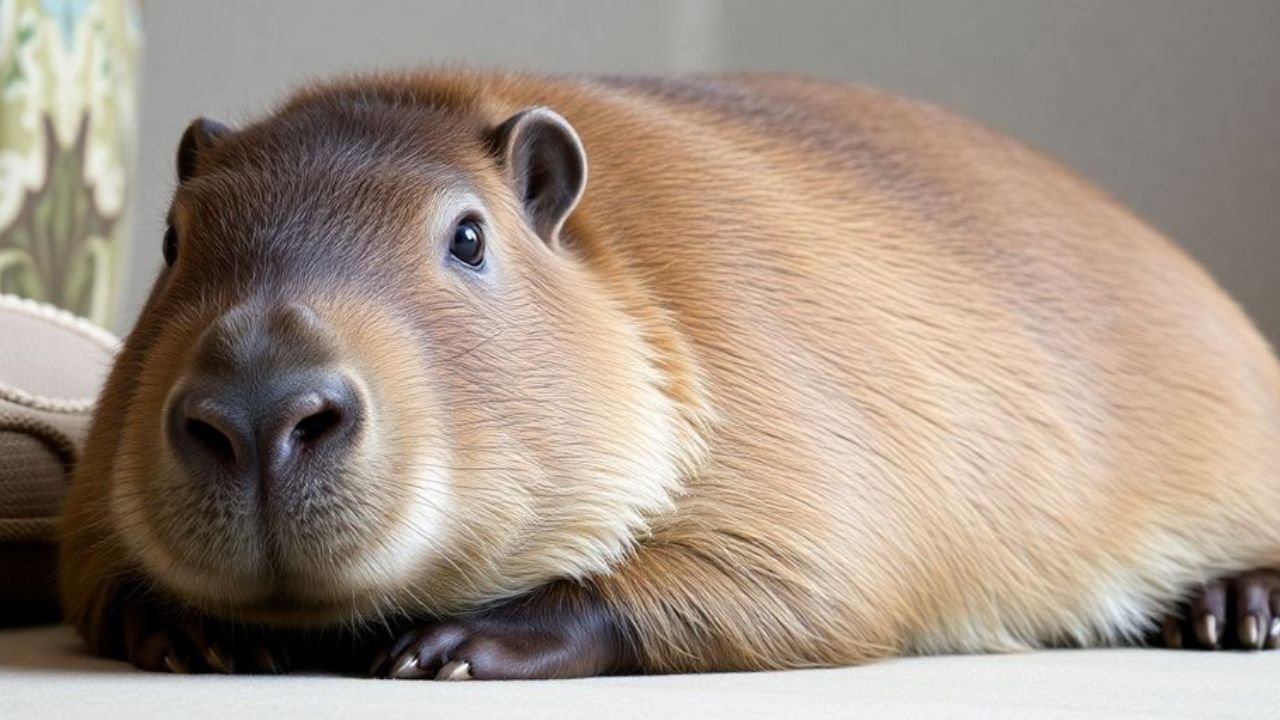
Capybara pet is a popular creature due to its peaceful appearance and youthful personality. However, when you know its needs and lifestyle, the reality seems more complicated. One of the questions that many people seek an answer to includes can you have a capybara as a pet, but they fail to realize the underlying responsibilities of owning a capybara. All significant features are described in this article, such as behavior, housing, diet and care. In addition, it also puts emphasis on hands-on difficulties (which the majority of first-time owners do not consider). Therefore, you will certainly decide whether this special animal is suitable for your lifestyle or not.
What Is a Capybara Pet?
A capybara pet refers to the domesticated care of the largest rodent species in the world. They are creatures of South America and tend to inhabit water bodies. Thus, they largely rely on land as well as the surrounding water. Moreover, they exhibit good social habits as well as living with groups and not alone. This is what makes them not like other household pets. Their requirement of size and character increases the amount of planning, effort, and long-term commitment required by the owners.
Can You Own a Pet Capybara?
Having a capybara is a matter of local regulations and individual preparation. Most areas have the government controlling or limiting the possession of exotic animals. Thus you need to do due diligence to confirm legal requirements, as rules may differ widely.
Meanwhile, ethical considerations are also an important issue. These are animals that need a huge and natural environment, which most households cannot afford. In case the condition is not right, retention of one will be a stress factor to the animal.
Important Ownership Considerations
| Factor | Explanation |
| Legal Status | May require permits or may be restricted |
| Space Requirement | Needs large outdoor enclosure |
| Social Needs | Cannot live alone |
| Cost | High long-term expense |
So, when people ask can you have a capybara as a pet, the answer depends on both law and lifestyle.
Capybara Behavior and Temperament Explained
Capybaras are peaceful and sociable, but still, they retain the wild instincts, which make them behave accordingly. Thus, they like to live in groups, and social interaction contributes a substantial factor to their emotional balance. Due to this, isolation usually results in stress, which has a direct influence on their health and mood.
1. Social bonding and group dynamics
Capybears are known to be social creatures by nature and they feel safe when they are around associates. In cases when they are not kept with others, they can get withdrawn or anxious, a clear indication that they are dependent on social interaction. Henceforth, owners have to give at least one companion in order to be emotionally stable.
2. Communication patterns and vocal signals
Different kinds of sounds such as the whistling of animals, soft barks, and gentle purring, are used by these animals in order to communicate. Every sound conveys another feeling and being able to observe their vocal behavior makes you aware of what they need. This way, active communication becomes a significant aspect of their everyday life.
3. Reaction to humans and surroundings
They might seem carefree, but then they are more vigilant when interacting with strangers. They will also be able to instill some trust with time as they will be able to intake it by speaking with them on a regular basis and properly handling them. However, sudden movements or loud noise may trigger defensive reactions.
Housing Needs for a Capybara Pet Environment
Housing contributes substantially to the welfare of such animals. A capybara requires an environment that resembles its usual environment. Thus, a small home setup is ineffective. An appropriate enclosure will encompass land and water. Also, safety precautions such as robust fencing are needed to ensure that there is no escape.
Ideal Housing Setup
| Requirement | Details |
| Space | Minimum 12×20 feet for a pair |
| Fence Height | At least 4 feet |
| Water Area | Pool or pond, 3 feet deep |
| Shelter | Covered area for rest |
Furthermore, sunlight exposure remains important because these animals stay active during the day.
What Do Capybaras Eat & Drink Daily
Eating is simple and yet necessary to their health. Capybara is primarily a herbivore, eating mostly grass and hay. Hence, fiber is the most significant part of their daily consumption.
As well, they need vitamin C since the synthesis of the nutrient in their body cannot be done. Through it, they can end up having severe health challenges in the long run.
Daily Feeding Routine
| Time | Food Type |
| Morning | Hay and pellets |
| Afternoon | Fresh grass |
| Evening | Vegetables in small quantity |
However, sugary food should be limited because it may disturb digestion.
Common Health Problems in Capybaras
The reason why health management is necessary is that such animals are very dependent on the environment, hygiene or diet.
1. Vitamin C Deficiency
The Capybaras do not have the ability to make vitamin C and they rely on external sources. They may get weak or experience issues with their joints in the absence. A nutritious diet and supplements will, therefore, prevent this condition. Regular assessments will guarantee early detection of symptoms.
2. Respiratory Infections
The unsettled or damp condition is also likely to lead to difficulty in breathing. A consequence of such infections can be difficulty breathing or the absence of energy. These can be reduced by making sure that the habitat is clean and dry. The proper ventilation can also be used to keep the respiratory system in good health.
3. Irritation and Parasites on the skin
They can be carriers like mites or lice on their skins and fur. This mostly happens in unsanitary conditions or in highly crowded areas. These issues can be managed (cleaning and examination). Grooming will also be incorporated in maintaining healthy skin.
4. Digestive Imbalance
A low-fiber meal can disrupt the digestive system and cause discomfort. Symptoms include poor appetite, or abnormal waste. As such, their digestive system is maintained at a constant through constant feeding of hay and grass. Noting everyday habits can identify problems in the beginning.
Exercise Requirements for Capybara Activity
Physical and mental health can be maintained through exercise. The capybara requires freedom of movement, as well as swimming in water.
Swimming assists in regulating body temperature and in natural behavior. As such, pool access cannot be optional.
Exercise Essentials
- Open space for walking
- Daily swimming access
- Interaction with other animals
Without proper exercise, stress levels may increase, which affects overall health.
Grooming Routine and Maintenance Needs
Capybara grooming is still as easy as a number of animals. They do not produce a lot of pollen so frequent cleaning is feasible.
But sometimes brushing is good in order to get dirt off and lose hair. Moreover, nail-cutting might be necessary as per the level of activity.
Grooming Checklist
- Weekly light brushing
- Occasional bathing
- Nail care when needed
This routine also strengthens the bond between owner and animal.
Size Information and Growth Details
When setting up the care and housing planning, size is also a significant factor. A capybara can become so huge that it is larger than ordinary pets, and this aspect influences everything in the context of its management. Adults may be even up to 4 feet long with a weight of about 170 pounds. Thus, they are larger, requiring greater space and infrastructure.
Size Overview
| Feature | Measurement |
| Height | 3–4 feet |
| Weight | Up to 170 pounds |
| Length | 36–48 inches |
Because of this size, they require outdoor living conditions instead of indoor confinement.
Training Your Capybara with Simple Methods
Patience and consistency make training possible. A capybara is intelligent, and with time can learn simple routines.
They can easily be trained to walk on a leash or in a certain area, as many owners have been able to do. Nonetheless, in-service training is better since young animals adjust easily.
Training Options
- Leash training
- Potty training
- Routine-based commands
As a result, training improves both control and interaction quality.
Pros & Cons of Keeping a Capybara as a Pet
Every decision involves advantages and challenges. Therefore, understanding both sides helps in making a balanced choice.
Pros
- Calm and gentle nature
- Social interaction
- Unique pet experience
Cons
- High maintenance
- Large space requirement
- Water dependency
- Legal restrictions
Thus, when considering can you have a capybara as a pet, these points must guide your decision.
Purchasing a Capybara Safely
Choosing the right source ensures both safety and long-term success in keeping such an animal.
1. Choosing a Reputable Breeder
A responsible breeder provides healthy and well-cared animals. They also share important information about behavior and history. This guidance helps new owners prepare properly. Therefore, selecting a trusted breeder becomes the first important step.
2. Checking Physical Health
Before purchasing, observing the animal’s condition becomes necessary. Healthy capybaras show active movement and smooth fur. Any signs of dullness or irritation may indicate health concerns. Careful inspection helps avoid future problems.
3. Understanding Legal Requirements
Ownership rules vary across regions, so checking legal conditions remains important. Some areas require permits, while others may restrict ownership. Knowing these rules prevents legal complications. Therefore, confirming regulations becomes essential.
4. Preparing Habitat in Advance
Setting up the environment before bringing the animal home reduces stress. A ready habitat allows smooth adjustment and comfort. It also ensures safety from the first day. Proper preparation improves long-term care success.
Reproduction and Breeding Considerations
Rearing capybaras is an experience and a controlled situation. When it is not so well-known, it can endanger the health of both the animals and the offspring.
Provided you are not interested in breeding, neutering is preferable. It controls behavior and avoids undesired reproduction.
Breeding Basics
- Needs expert supervision
- Requires large space
- Demands constant monitoring
Therefore, breeding should remain a planned decision rather than a casual choice.
Similar Pets to the Capybara for Easier Care
If this animal feels too demanding, then you can explore similar options. Some smaller animals offer a comparable experience with less effort.
Alternative Options
- Guinea pigs
- Prairie dogs
- Patagonian cavies
These pets require less space and simpler care routines. Hence, they may suit beginners better.
Conclusion:
A capybara pet is an experience of a lifetime with a rewarding experience, but also requires earnest consideration and careful planning. Legal, financial and environmental considerations should be taken into consideration. Thus, knowing all that assists you in making a good choice.
In case you are still not sure and continue to ask whether you can have a capybara as a pet, then take time and consider whether you are prepared. Considering a move is always best in life and it also guarantees a better life for the animal.
Also Read About: