Blue eyes on a dog carry a kind of quiet magnetism that’s hard to explain. That white, icy gaze halts other humans in their tracks regardless of the size of the animal: a Siberian Husky hacking through snow or a small Chihuahua yawing up out of a lap. The number of breeds that possess dogs with blue eyes is actually many more than one might think and there is more than just snap-on luck and coat color. Certain breeds possess particular gene mutations that can ensure the mutants to have blue eyes, and they are few, whereas they occur in others due to mutations.
Knowing the breeds that inevitably possess this characteristic and why guides you to more intelligent decisions in adopting or purchasing. All dogs with blue eyes may not be bad in terms of health, but you will find that there are genetic trees that are actually dangerous and which you would want to know about before committing your life to. Some of the 10 breeds discussed in this guide include the science behind the blue eyes, the health factor, as well as the names that the dog with blue eyes can be called in case you already intend to adopt one.
Top 10 Best Dogs With Blue Eyes: Ranked by Trait and Lifestyle Fit
| Rank | Breed | Blue Eye Source | Lifestyle Fit |
| 1 | Siberian Husky | ALX4 gene mutation | Active families, cold climates |
| 2 | Australian Shepherd | Merle gene | Working homes, dog sports |
| 3 | Border Collie | Merle gene | High-activity, experienced owners |
| 4 | Catahoula Leopard Dog | Merle/heterochromia | Experienced owners only |
| 5 | Pomsky | Inherited ALX4 | Active households, smaller spaces |
| 6 | Alaskan Klee Kai | Husky ancestry | Devoted owners, experienced handlers |
| 7 | Cardigan Welsh Corgi | Merle gene | Families, apartment-friendly |
| 8 | Collie | Merle gene | Families with children |
| 9 | Great Dane | Merle/harlequin | Calm households, experienced owners |
| 10 | Dalmatian | Piebald gene | Active, health-aware owners |
1. Australian Shepherd: A Top Blue-Eyed Dog Breed
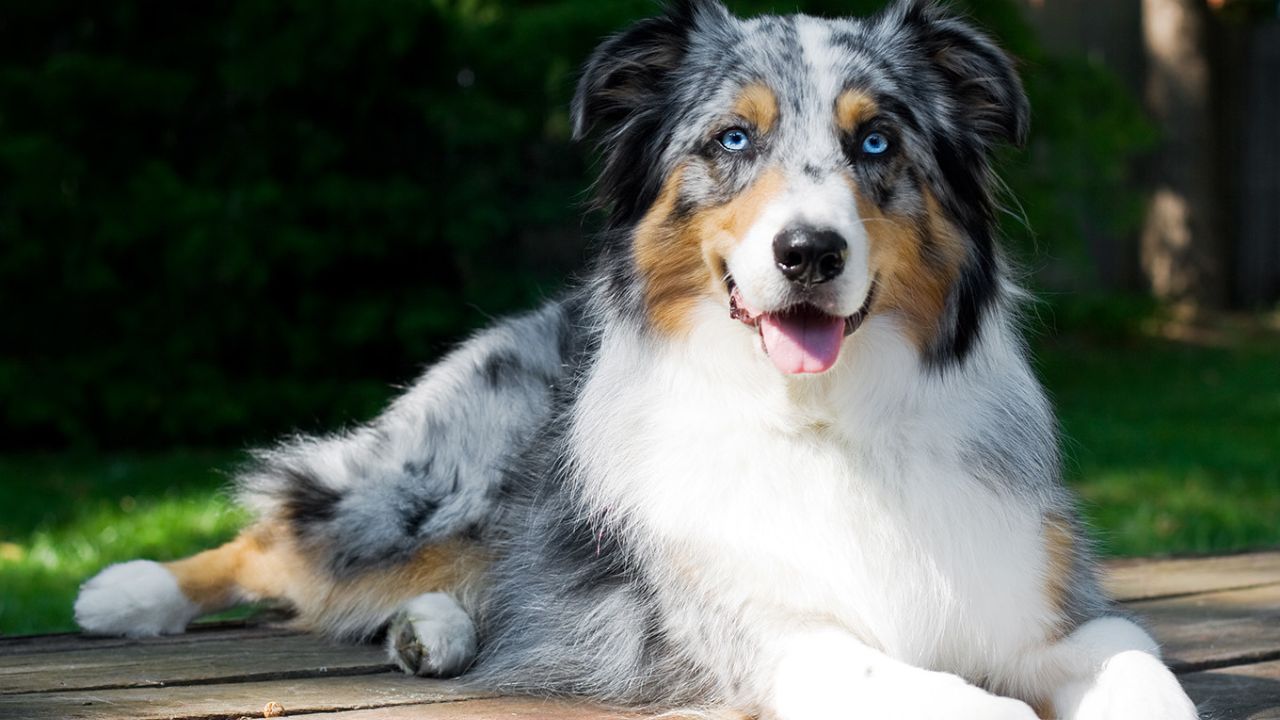
One of the most known dogs with blue eyes and well justified is the Australian Shepherd. As a common trait, Merle-coated Aussies have one or two blue eyes, occasionally a blend of blue and brown in the same eye. A mix of a colouring that is not present with their speckled, multi-coloured coat is stuff that makes them aesthetically impressive more than most other breeds.
Aussies are violently clever, and physically-motivated. They excel in households where they have an orderly task, outdoor activities, and intellectual stimulation. An Australian Shepherd will amuse itself and is not likely to be successful in the long run of your kitchen or lawn.
Australian Shepherd Size, Coat and Temperament at a Glance
| Feature | Details |
| Group | Herding |
| Height | 18–23 inches |
| Weight | 40–65 pounds |
| Coat | Medium double coat |
| Colors | Blue merle, red merle, black, red |
| Life Span | 12–15 years |
| Temperament | Intelligent, energetic, active |
2. Siberian Husky: The Most Famous Blue-Eyed Dog Breed
The Siberian Husky is no other breed that is more associated with blue eyes. This is because the ALX4 gene mutation which gives them blue eyes even though their coat is changing them is peculiar to this breed only. As white, so can a black-coated Husky carry the ice-blue eyes of a black-coated. Huskies may have one blue eye and one brown eye, a condition known as heterochromia. In some cases, they can even display both colors within the same iris, creating a unique and striking appearance.
Huskies naturally possess high energy levels and exceptional endurance because breeders originally developed them to pull sleds across long distances in Siberia. As a result, they need daily exercise, regular mental stimulation, and secure fencing. Moreover, Huskies often look for opportunities to explore, and many can escape surprisingly well when owners do not provide proper containment.
Siberian Husky Size, Coat and Temperament at a Glance
| Feature | Details |
| Group | Working |
| Height | 20–23.5 inches |
| Weight | 35–60 pounds |
| Coat | Dense double coat |
| Colors | Black, gray, white, tan combinations |
| Life Span | 12–15 years |
| Temperament | Alert, friendly, intelligent |
3. Border Collie: Intelligent Herding Dog That Can Have Blue Eyes
Merle Collies often also have blue or marbled eyes, and as they are also intense and focused in expression they appear almost inhuman. These dogs have been known to be the smartest breed of dogs in the world an accolade that has been validated by decades of behavioral and cognitive studies.
They require routine working in a day. Agility, obedience competitions, herding, flyball Border Collies are good at all of them as they really like the challenge. Anxiety and destructive behavior are only too long, without that outlet.
Border Collie Size, Coat and Temperament at a Glance
| Feature | Details |
| Group | Herding |
| Height | 18–22 inches |
| Weight | 28–48 pounds |
| Coat | Medium double coat |
| Colors | Black, blue, merle, red, sable combinations |
| Life Span | 10–17 years |
| Temperament | Intelligent, energetic, loyal |
4. Catahoula Leopard Dog: Heterochromia and Blue Eyes Combined
The Catahoula Leopard Dog is arguably the most visually dramatic entry on this list. Their leopard-spotted or merle coats and the heterochromia one eye blue, the other brown make them have the effect of being followed wherever they move. It was designed in Louisiana to hunt and bother wild boar, and their motivated nature and independence runs deep.
This breed requires professional care. They are enthusiastic, vigorous animals that should be heavily structured and have boundaries established early. They are normally intimidating to first-time dog owners.
Catahoula Leopard Dog Size, Coat and Temperament at a Glance
| Feature | Details |
| Group | Herding |
| Height | 22–24 inches |
| Weight | 50–95 pounds |
| Coat | Short, smooth |
| Colors | Merle, brindle, black, blue, red combinations |
| Life Span | 10–14 years |
| Temperament | Energetic, protective, independent |
5. Alaskan Klee Kai: Husky-Like Breed With Frequent Blue Eyes
The Alaskan Klee Kai was developed as a companion size breed of Siberian Husky, and has blue eyes and Siberian Husky intelligence and energy. These come in a toy, miniature and standard format, all bearing the same sharp focus look that causes them to appear always on the alert.
They attach themselves firmly to the members of their immediate family, and are reserved towards strangers; hence early and continual socialization is imperative to this breed. In its absence that natural bait will be too much shyness or fear.
Alaskan Klee Kai Size, Coat and Temperament at a Glance
| Feature | Details |
| Group | N/A |
| Height | Up to 17.5 inches |
| Weight | 6–25 pounds |
| Coat | Medium, wiry double coat |
| Colors | Black and white, gray and white, red and white |
| Life Span | 13–16 years |
| Temperament | Alert, loyal, intelligent |
6. Pomsky: Designer Breed That Inherits Husky Blue Eyes
The Pomsky is a crossbreed between a Pomeranian and Siberian Husky breed, which became popular in the 2010s. The Husky ALX4 gene defect is passed down to many Pomskies, so that the blue eyes occur sometimes a lot in the colors of their coats where you would not be expecting them to be. They are not very big and with such conspicuous eyes, they form an appearance that takes a good photograph hence partially their appeal to social media.
They are active, expressive and highly social. The owners who can spend time exercising with their Pomskies on a daily basis, training them and spending time together are the best owners.
Pomsky Size, Coat and Temperament at a Glance
| Feature | Details |
| Group | Designer |
| Height | 10–15 inches |
| Weight | 20–30 pounds |
| Coat | Medium, straight |
| Colors | White, gray, black, brown, red, blue |
| Life Span | 12–15 years |
| Temperament | Energetic, social, loyal |
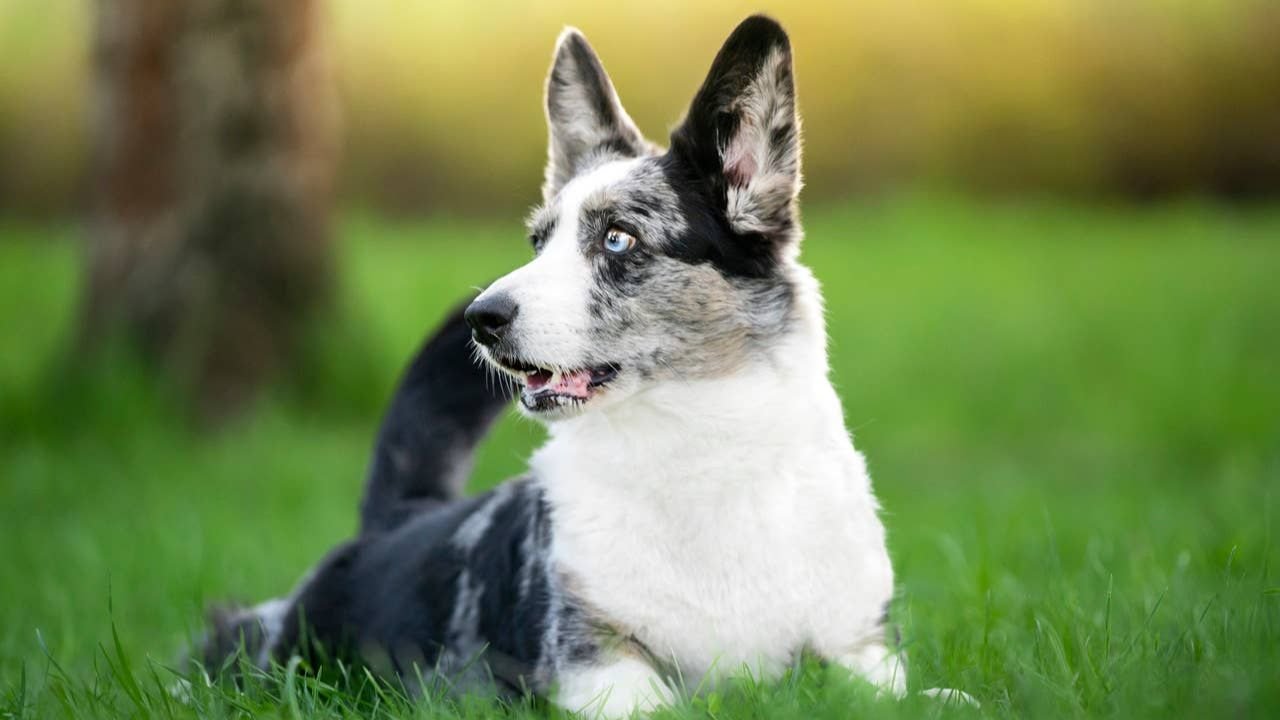
7. Cardigan Welsh Corgi: Merle-Coated Corgi With Blue Eyes
Contrary to the Pembroke Welsh Corgi, the Cardigan breed has the option to possess the merle gene and blue merle Cardigans are often seen to possess one or both blue eyes which may also be marbled with brown. These short-bodied, long-legged dogs are not as athletic as they appear, and possess sharp instincts in herding, and fast responsive mind.
They are loving and loyal without encroaching on the demanding side and will suit well in families, singles and older owners. Training at an early age is important with Cardigans since they may be selectively obedient due to their independent nature.
Cardigan Welsh Corgi Size, Coat and Temperament at a Glance
| Feature | Details |
| Group | Herding |
| Height | 10–13 inches |
| Weight | 25–38 pounds |
| Coat | Medium double coat |
| Colors | Red, sable, brindle, black, blue merle |
| Life Span | 12–15 years |
| Temperament | Affectionate, playful, intelligent |
8. Collie: Loyal Herding Breed With Merle-Linked Blue Eyes
Blue-eyed Collies, with or without marbled eyes, merle coats may be smooth or rough. The rugged Collie, popularized by Lassie, is especially admirable with eyes of blue hue against his running and multi-colored coat. They are natural guardians of children with very high levels of trainability, loyalty and strong protective instinct.
Collies are in their true nature working dogs and are best kept working on a structured daily basis. They easily adjust to living in a family and become strongly connected to those that live with them.
Collie Size, Coat and Temperament at a Glance
| Feature | Details |
| Group | Herding |
| Height | 22–26 inches |
| Weight | 50–75 pounds |
| Coat | Long/rough or short/smooth |
| Colors | Sable, blue merle, tricolor, white combinations |
| Life Span | 12–14 years |
| Temperament | Loyal, affectionate, attentive |
9. Great Dane: Giant Breed That Can Carry Blue Eyes
When the pattern of the harlequin of merle coats is used, Great Danes can build an impressive blue eye in a dog which on average is well above 30 inches tall at the shoulder. In spite of their size, the Great Danes are peaceful, calm and very truly affectionate. People refer to them as the largest lap dogs in the world and anybody who has owned one will testify that it is not only whole true to some extent.
The fact that their life is 6 to 8 years is one of the more difficult facts of the breed. But the Great Danes are always ready to spend whatever time they have with them in good cheer, fidelity, and silent comfort.
Great Dane Size, Coat and Temperament at a Glance
| Feature | Details |
| Group | Working |
| Height | 28–34 inches |
| Weight | 99–200 pounds |
| Coat | Short, smooth |
| Colors | Harlequin, merle, fawn, black, blue, brindle |
| Life Span | 6–8 years |
| Temperament | Calm, gentle, friendly |
10. Dalmatian: Piebald Gene Carrier With Blue Eye Possibility
All Dalmatians are heterozygous and have two copies of the piebald gene, it is the immediate reason behind their famous white coat with black or liver spots. This type of non-dominant genetics may create blue eyes as well in some people. Congenital deafness has a statistically greater risk in blue eyed Dalmatians and this is a factor that any prospective owner must not blindly adopt.
In addition to the genetic factors, Dalmatians are extremely lively dogs. Enjoying a high level of activity every day, originally reared as carriage dogs, they work best in agile and experienced families.
Dalmatian Size, Coat and Temperament at a Glance
| Feature | Details |
| Group | Non-Sporting |
| Height | 19–24 inches |
| Weight | 45–65 pounds |
| Coat | Short |
| Colors | White with black or liver spots |
| Life Span | 11–13 years |
| Temperament | Active, intelligent, friendly |
Why Do Dogs With Blue Eyes Have That Distinctive Pale Gaze
The color of the eyes in dogs is regulated by the factor melanin the coloring pigment in the skin, coats and irises. In the absence or low levels of melanin in the iris, the light can be scattered in different manners and the eye turns blue. This decrease is triggered by a number of distinct genetic pathways, and each of them operates via a distinct mechanism.
- Merle gene: Disrupts pigment distribution across the coat and eyes. One copy is enough to produce blue or marbled eyes in many breeds.
- Piebald gene: Makes white spots by depigmenting specific spots. Two copies may lead to blue eyes and even deafness.
- ALX4 gene mutation: Sibers are the only mutation observed in this gene. Gives birth to blue eyes regardless of the color of the coat.
- Random genetic mutation: This occurs when there occurs an unplanned change in eye pigmentation and may occur in any breed although infrequently.
- Albinism: There are only few and far between in dogs. The complete loss of melanin causes eyes that are pale blue or pink.
Health Risks Linked to Blue Eye Genetics in Dogs
There is a significant increase in the chances of deaf, blind and both properties as a result of the breeding of two merle dogs or pairing two dogs with double or one set of piebald genes. It is not a matter of the color of eyes, but the combination of genes that relate to it. No such pairings are made by responsible breeders. Veterinary ophthalmologist Dr. Kathleen Bedard of VCA SouthPaws also points out that light irises potentially can not provide as much UV protection as they used to because of aging, which would predispose dogs to cataracts due to excessive exposure to UV. When a person is buying a blue-eyed dog, always enquire about the parents of the puppy.
Best Names for Dogs With Blue Eyes: Themed Ideas by Category
Picking names for dogs with blue eyes is genuinely one of the more enjoyable parts of bringing a new dog home. The right name can echo that cool, chilly feeling that their eyes have or it can work in opposition, to create something more playful. One to two syllables long names are most effective to train, as the dogs are more responsive to more sounds.
Actual case study: Siberian Husky named Glacier fits well with the Arctic origin of the breed, and its icy eyes. At the same time, a small blue-eyed Chihuahua named “Iceberg” appears to be simultaneously a visual pun and a reference to the color that is easy to remember and appropriate to have at the same time.
| Theme | Name Ideas |
| Ice and Winter | Frost, Glacier, Blizzard, Sleet, Arctic |
| Sky and Water | Azure, Sky, Ocean, Cobalt, Reef |
| Mythology | Odin, Freya, Thor, Artemis, Loki |
| Gemstones | Sapphire, Crystal, Topaz, Aqua, Opal |
| Pop Culture | Elsa, Ghost, Mystique, Gandalf, Bolt |
Names for dogs with blue eyes don’t need to be a direct color reference to work well. A name like “Ghost” drawn from the direwolf in Game of Thrones carries personality and meaning beyond just the eye color, which often makes it more memorable than something straightforward like “Blue.”
Final Thoughts on Choosing Dogs With Blue Eyes
Dogs with blue eyes are truly fascinating. However, their eye color reflects more than just appearance. In many cases, genetics play a major role. For example, the ALX4 mutation gives many Siberian Huskies their distinctive blue eyes. Similarly, the merle gene commonly influences eye color in herding breeds, while the piebald gene often appears in spotted and white-coated dogs. Therefore, understanding these genetic traits can help you make a more informed adoption decision and avoid potential health concerns.
Fortunately, blue-eyed dogs come in a wide range of breeds and personalities. Whether you prefer the energy of a Border Collie, the devotion of a Pomsky, or the calm nature of a Great Dane, you can find a breed that matches your lifestyle. However, appearance should never be the only factor in your decision. Before choosing a puppy, research breeders carefully and review all relevant health testing records. Additionally, ask about genetic screenings and the dog’s family history. By taking these steps, you can find the perfect blue-eyed companion and enjoy everything your new pet brings to your life.
Also Read About:
Most Intelligent Dog Breeds in 2026: Complete Guide for Smart Pet Owners